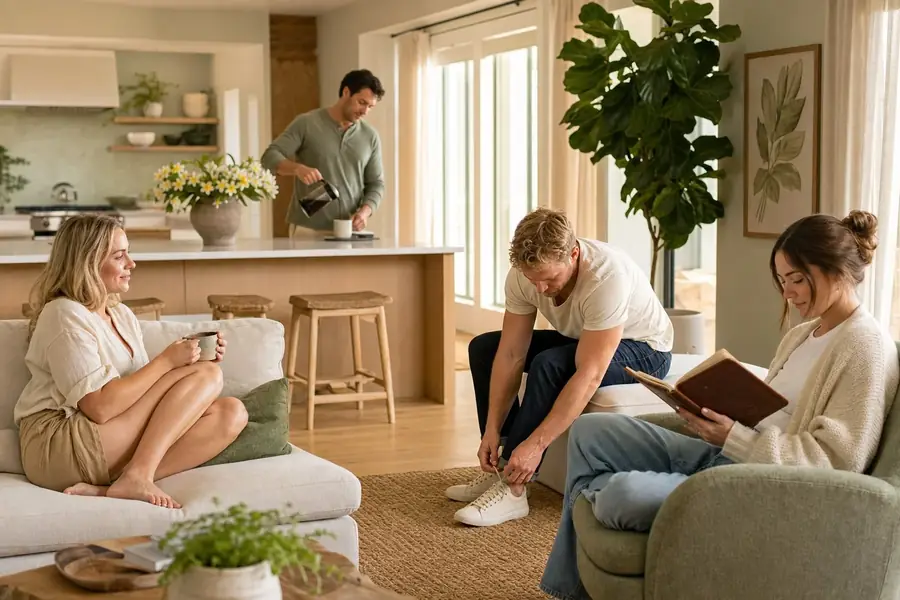
Sober living is the housing layer that makes outpatient recovery work. Returning to an unstable or triggering home environment in the first 90 days is one of the highest relapse-risk scenarios in addiction medicine. RECO Intensive's sober-living residences in Delray Beach provide the structured housing that protects the clinical gains of treatment.
What sober living at RECO looks like
Sober-living clients live in clinically-coordinated residences in Delray Beach — small, gender-specific homes with house management, weekly community meetings, structured drug testing, curfew norms, and clear accountability around sobriety and chore responsibility. Residences pair with clinical programming (PHP, IOP, or aftercare); they're not separate from the treatment plan.
What's included
- Private or semi-private bedrooms in RECO's Delray Beach residences
- House manager on-site (typically a long-time alumni in sustained recovery)
- Weekly house community meeting
- Structured drug and alcohol testing
- Curfew norms appropriate to clinical stage
- Chore responsibility and house community contribution
- Coordination with the client's clinical treatment plan
- Direct access to the alumni community
How sober living fits in the continuum of care
Sober living typically begins during PHP (clients sleep in sober-living rather than residential while attending day programming) and continues through IOP and often into early aftercare. Length of stay varies — typically 3-12 months, sometimes longer for clients in extended recovery.
Who sober living serves best
Clients in PHP or IOP whose home environment isn't safe or supportive enough for stable recovery. Clients from out of state whose home is geographically separated from their treatment team. Clients in the first 90 days post-residential who need ongoing accountability. Clients in mid-recovery rebuilding their independence. Anyone whose recovery is stronger with structured community than alone.
What sober living builds toward
The arc of sober living moves from more structure (early stay, more rules, more oversight) to less structure (late stay, more independence) toward eventual independent housing in sustained recovery. Many alumni stay in or near Delray Beach for sustained periods because the recovery community is here.
Why RECO's sober living is different
Many "sober living" facilities are housing-only with no clinical coordination. Ours are clinically integrated — the house manager talks to your case manager, your therapist knows the residence dynamics, and the housing decisions are treatment-plan decisions. Small, gendered, accountable, real community.